
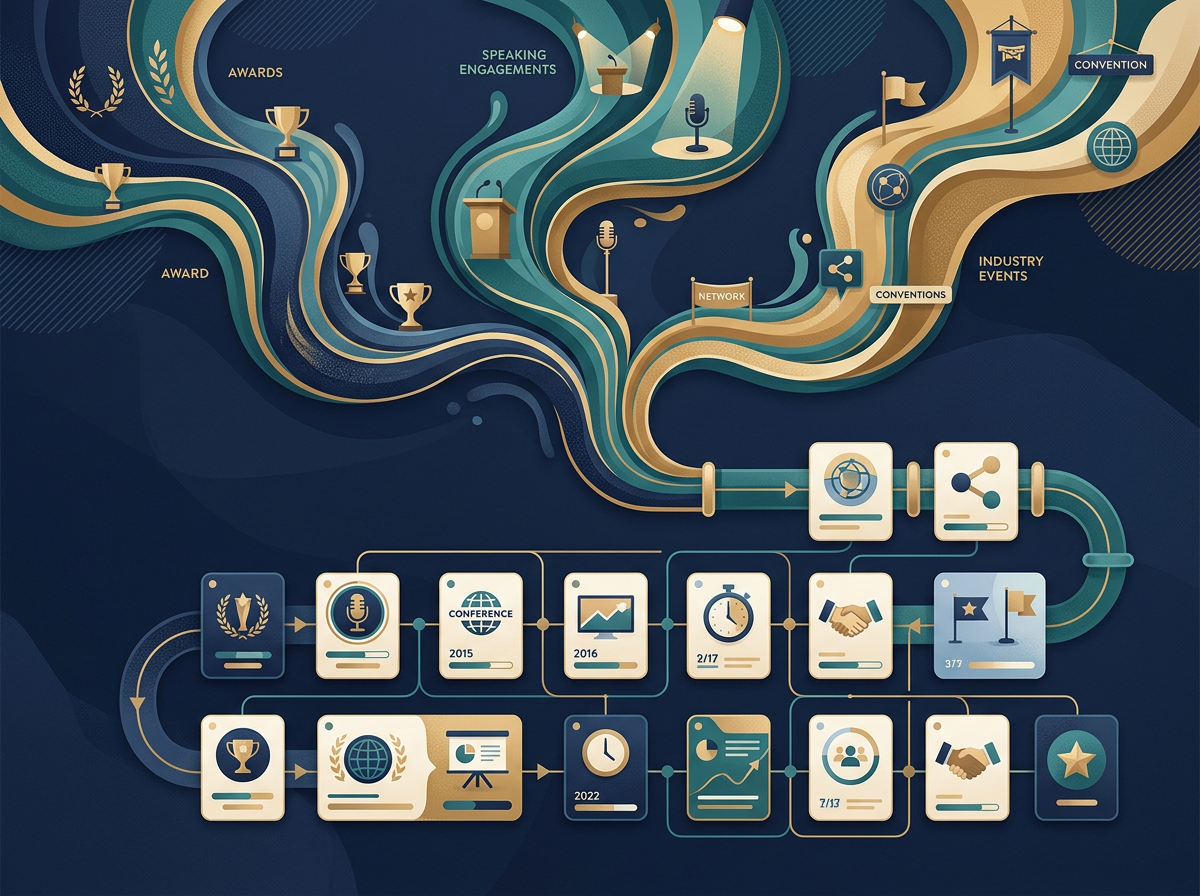
Awards, speaking slots, and industry events are some of the most deadline-heavy work in corporate communications. Here’s where AI saves the most time, and where it shouldn’t be making the call.
PRTech Studio · October 2026
The corporate affairs side of PR rarely gets the attention that media relations does. But for many brands, it’s where some of the most valuable visibility comes from: an industry award that becomes a sales talking point, a keynote that positions an executive as a sector voice, a panel that puts the company in the right room.
It’s also some of the most administratively heavy work in the function. Dozens of programs, each with its own categories, criteria, deadlines, fees, and formats. Events with call-for-speaker windows that open and close without warning. Results that arrive by email months after submission. It’s exactly the kind of work where AI earns its place, as long as it’s set up properly.
One Pipeline, Not Three
Most teams track events, awards, and speaking opportunities in different places: a spreadsheet for awards, a calendar for events, and speaking slots buried in email threads. That fragmentation is where deadlines get missed.
The first step is structural. Bring all three into one shared log with consistent statuses, dates, and owners. Events tied to the client’s business, award programs with their categories and deadlines, and speaking slots from first pitch to confirmed session. When everything lives in one place, both people and AI tools can see what’s coming, what’s pending, and what’s been decided.
Where AI Saves the Most Time
Research and shortlisting. Identifying which award programs, conferences, and speaking opportunities fit a client’s sector, market, and goals. AI can compile a shortlist with dates, eligibility criteria, and submission requirements in a fraction of the time manual research takes. The output still needs to be checked against official sources, since program details change from year to year.
Deadline tracking. A regular scan of the log that flags what closes this month, what needs input from the client, and what’s waiting on an organizer. This turns a reactive scramble into a predictable rhythm.
Drafting submissions. Award submissions follow predictable structures: a narrative, supporting evidence, and responses mapped to each judging criterion. AI drafts these well when it’s working from verified facts, such as approved company descriptions, confirmed figures, and past coverage. It drafts them badly when it’s left to fill gaps on its own.
Logging outcomes. Shortlists, wins, and declines recorded the day they arrive. Over time, this builds a track record that informs which programs are worth entering again and which ones aren’t delivering value.
What Stays Human
Deciding which ones are worth it. Not every award adds value. Some programs are pay-to-play with little credibility. Some speaking slots put an executive on a stage with the wrong audience. Knowing when to let an opportunity pass is a judgment call that depends on the brand, the market, and the moment.
Respecting the client’s choice. We recommend which category to enter or which panel to accept. When the client prefers a different option, that choice stands. It’s their brand and their decision. The recommendation and its reasoning can be noted, but the submission reflects what the client decided.
Final review before submitting. Every submission is read by a senior professional before it goes in. Judges notice generic language, and a single unverified claim in an award entry can undermine an otherwise strong case.
Organizer relationships. Conversations with award organizers, event teams, and selection committees stay personal. These relationships often determine who gets invited to speak next year, and they’re built over time by people, not workflows.
No missed deadlines. No wasted entries. AI keeps the pipeline moving. Judgment decides what’s in it.
Where to Start
Build the shared log first. List every award, event, and speaking opportunity currently in play, with its deadline and status. Then add one recurring check: a weekly scan that flags anything closing in the next 30 days. That single step alone removes most of the last-minute pressure from the corporate affairs calendar. The drafting and research gains follow once the structure is in place.



Leave a Reply