AI systems now consume press releases as source material for generated answers. The format still works. The structure needs to change. Here’s what to keep and what to update.
PRTech Studio · June 2026
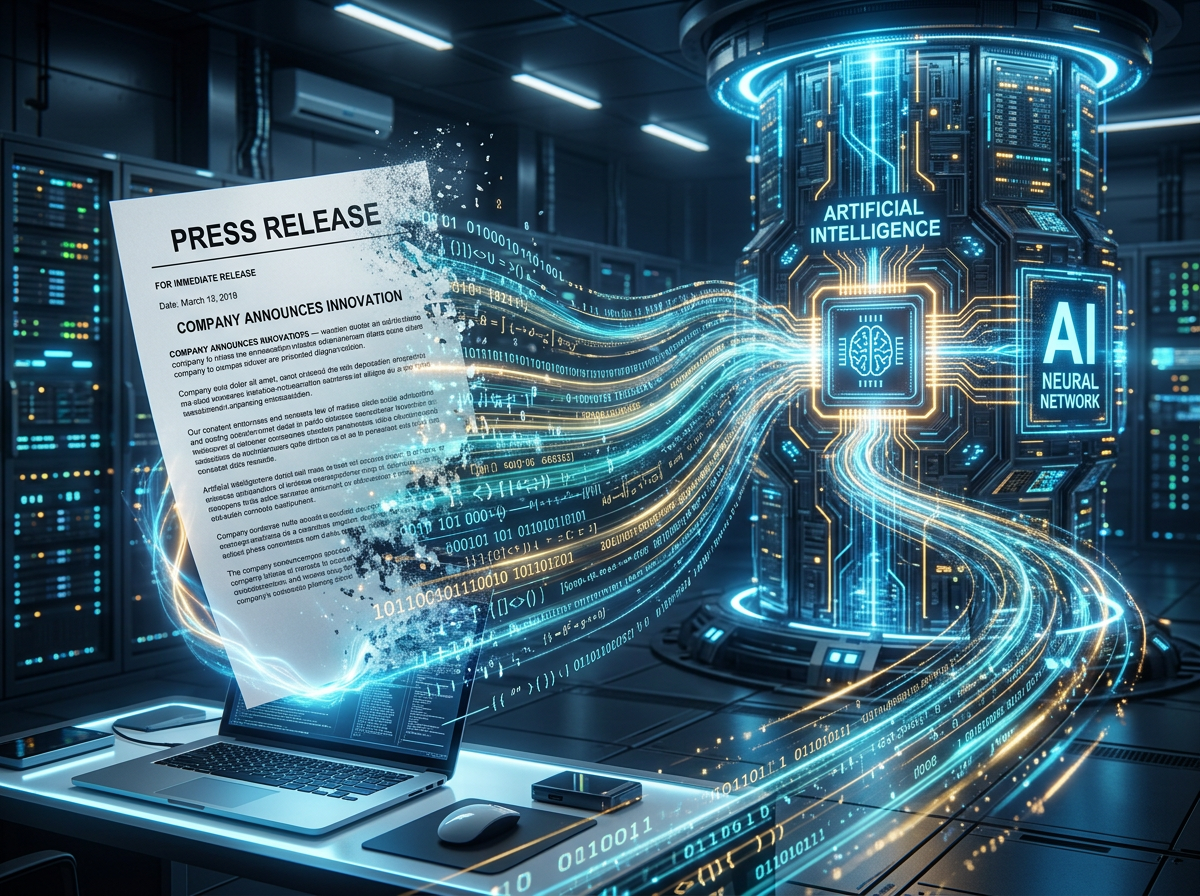
The press release has survived every major shift in media for over a century, and it will survive this one too. But the audience for a press release in 2026 is no longer just journalists and search engine crawlers. It now includes AI systems that read your release, extract facts from it, and use those facts to answer questions from users who may never visit your website or read the original coverage at all.
This changes what makes a press release effective. The format hasn’t become obsolete. It’s become a different kind of document, one that needs to satisfy both human readers and AI retrieval systems at the same time.
What to Keep
A clear news hook. AI systems, like journalists, look for a reason a piece of information matters right now. A press release without a clear hook gets deprioritized by both human editors and AI retrieval algorithms. The fundamentals of newsworthiness haven’t changed.
Quotable spokesperson lines. Attributed quotes remain valuable, and arguably more valuable than before. AI systems weight named, attributed statements more heavily than unattributed marketing copy. A strong quote from a named executive is now doing double duty: it humanizes the release for readers and it gives AI systems a citable, attributable claim.
Dateline and boilerplate. The standard dateline and company boilerplate continue to matter. They provide AI systems with consistent, structured information about who the company is, which feeds directly into entity recognition. A consistent boilerplate across every release reinforces your entity profile over time.
Standard release structure. The inverted pyramid format, headline, subhead, lead paragraph, supporting details, boilerplate, contact information, remains the right structure. It’s not just convention. It’s also the structure that’s easiest for both human skimmers and AI parsers to extract information from quickly.
What to Change
Vague claims become hard numbers. “Significant growth” should become “47% year-over-year revenue growth.” “Industry-leading performance” should become a specific benchmark with a named comparison point. AI systems extract and cite verifiable data far more readily than qualitative claims. Every vague phrase in your release is a missed citation opportunity.
Generic terms become named entities. Replace “a leading technology company” with your actual category descriptor, used consistently across every release. Replace “our partners” with named partner companies where possible. AI entity recognition depends on specificity. Generic language makes it harder for AI to build a confident model of who you are and what you do.
Buried facts move upfront. Traditional press release writing sometimes saves the most interesting detail for the third paragraph, building narrative tension. AI retrieval systems don’t read for narrative tension. They extract the most prominent, early-positioned facts first. Move your most citable data points and claims into the first two paragraphs.
One-time sends become a structured archive. A press release that lives only in a wire distribution and disappears after the initial coverage cycle has limited long-term GEO value. Maintain a structured, well-organized newsroom on your own website where every past release remains accessible, properly dated, and consistently formatted. This gives AI systems a stable, citable source they can return to long after the initial news cycle ends.
A Practical Example
Before: “Company X today announced strong momentum in its core business, with significant growth across key markets and continued investment in innovative technology.”
After: “Company X today announced 34% year-over-year revenue growth in Q2 2026, driven by expansion in the UAE and Saudi Arabia. The company has invested $12 million in its AI-powered analytics platform since January 2026.”
The second version gives AI systems exactly what they need: specific numbers, named markets, a clear timeframe, and a concrete investment figure. It’s also, not coincidentally, a better press release by traditional journalistic standards. Good GEO practice and good PR writing have converged.
The press release isn’t dead. It’s being read by a new audience, and that audience rewards specificity over style.
The Bottom Line
Press releases written for the AI era aren’t fundamentally different documents. They’re tighter, more specific versions of what good press releases have always been. The discipline of writing in hard numbers, named entities, and clear attribution was always good practice. It’s simply non-negotiable now, because the audience reading your release has expanded to include systems that will repeat exactly what you give them, and nothing more.