
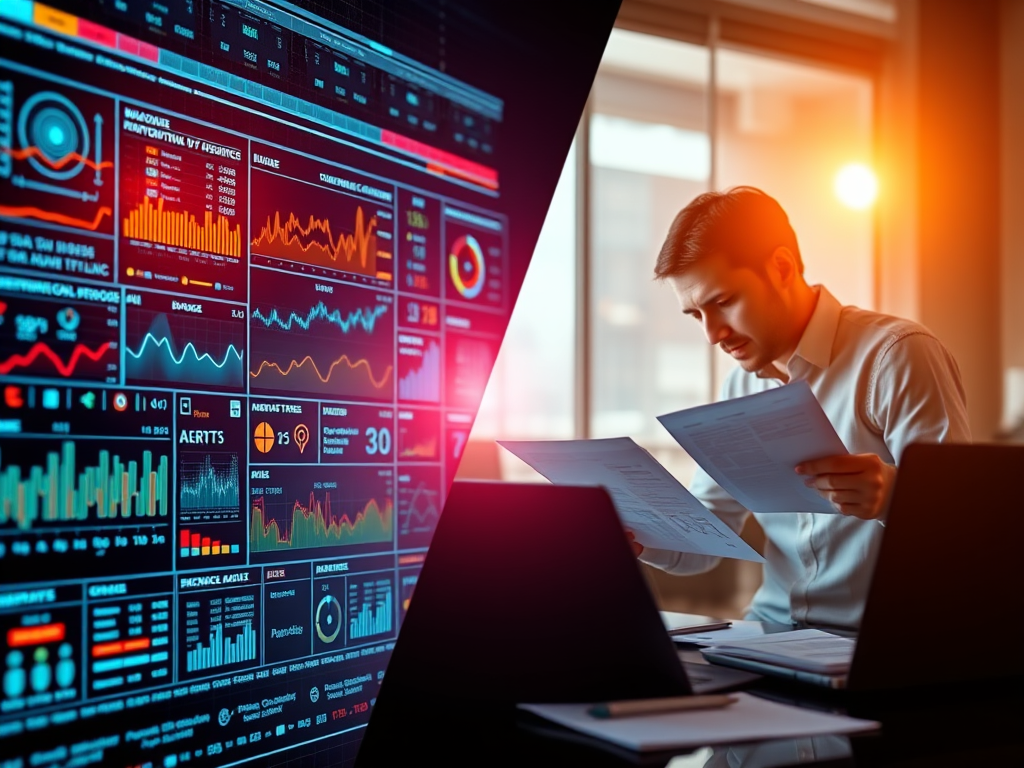
AI-powered monitoring tools are fast. But speed without judgment creates noise, not insight. Here’s where to automate and where to keep a human in the loop.
PRTech Studio · April 2026
The pitch from every monitoring vendor in 2026 is roughly the same: let AI handle it. Automated keyword tracking, real-time alerts, sentiment scoring, competitive dashboards. The tools are genuinely impressive, and they’ve eliminated hours of manual work that used to define junior PR roles.
But the teams getting the best results aren’t fully automated. They’re hybrid. They’ve drawn a clear line between what AI should handle and what still requires a human.
What to Automate
These are the monitoring tasks where AI consistently outperforms manual effort. They’re high-volume, repetitive, and structured enough for machines to handle reliably.
Keyword tracking. Set your brand names, product names, executive names, and competitor names as tracked terms. AI will scan thousands of sources continuously without fatigue or gaps. Review the results weekly, adjust the terms quarterly.
Mention alerts. Real-time notifications when your brand appears in a new article, broadcast segment, or social post. The value here is speed. AI delivers alerts in minutes. A human scanning manually might catch the same mention hours later.
Clip collection. Pulling together all coverage from a campaign window used to take half a day. Automated clip collection does it continuously, organizing results by outlet, date, and topic.
Volume reporting. How many mentions did we get this week? How does that compare to last month? AI-powered dashboards update these numbers in real time without anyone building a spreadsheet.
Competitor tracking. Monitoring your own coverage is table stakes. AI lets you track competitors at the same depth, giving you a live view of share of voice and competitive activity.
Social listening. Tracking brand mentions across social platforms at scale is something no human team can do manually. AI handles the volume and surfaces trends that would otherwise be invisible.
What to Keep Human
These are the monitoring tasks where AI falls short. They require context, judgment, relationships, and the kind of pattern recognition that comes from experience, not data processing.
Narrative interpretation. AI can tell you that coverage exists. It cannot reliably tell you what the coverage means for your positioning. Is this article framing you as an innovator or a risk? That distinction requires someone who understands your company’s strategic context.
Relationship context. A monitoring tool treats every journalist equally. A human knows that this particular reporter has covered your CEO before, that the last interaction went badly, or that they’re working on a longer feature and this mention is just the opening. That context changes how you respond.
Crisis judgment. AI can flag a spike in negative mentions. It cannot decide whether that spike warrants an internal escalation, a public response, or no action at all. Crisis judgment depends on experience, institutional knowledge, and the ability to read between the lines of what’s being published.
Cultural reading. AI-generated sentiment scores flatten cultural nuance. A phrase that reads as neutral in one market may carry very different weight in another. This is especially true across the Gulf region, where formality, religious context, and political sensitivity shape how language is interpreted.
Strategic prioritization. Not all coverage matters equally. A single paragraph in the Financial Times may be worth more strategically than twenty trade mentions. A human can make that call. A dashboard cannot.
Stakeholder briefings. When it’s time to brief the CEO, the board, or a client on what the coverage landscape looks like, no one wants a dashboard export. They want interpretation, context, and a recommendation. That’s a human skill.
Automate collection. Keep interpretation human.
The Hybrid Model
The best monitoring operations in 2026 run on a simple principle: let AI handle the volume, let humans handle the meaning. AI collects, filters, and organizes. Humans interpret, prioritize, and act.
Teams that automate everything miss context. Teams that do everything manually miss coverage. The answer is neither extreme. It’s a clear division of labor between machines and people, with each doing what they do best.



Leave a Reply